


SECOND-OF-A-KIND PROJECTS - LEARNINGS FROM AN EPC PERSPECTIVE
- 27 october 2026
- 12:00
- LOCATION: KIVI
- THE HAGUE
- THE NETHERLANDS
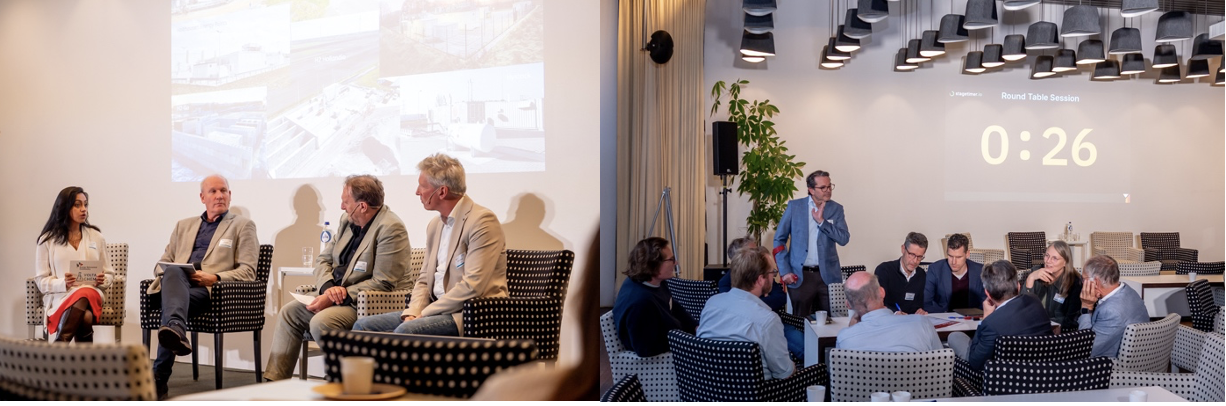
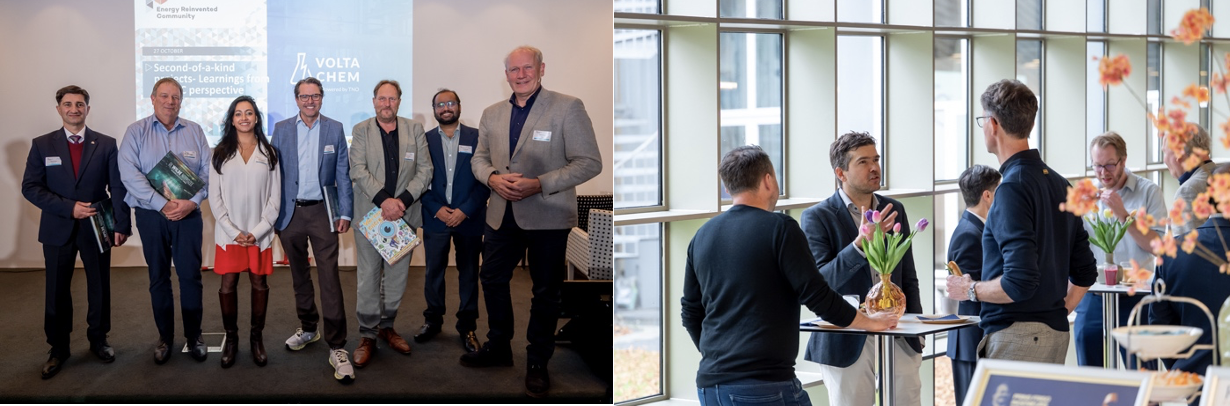
Last Tuesday, Energy Reinvented Community and VoltaChem welcomed more than 50 professionals to KIVI in The Hague for Second-of-a-Kind Projects – Learnings from an EPC Perspective. Together we looked at the hydrogen projects now coming on stream in the Netherlands and Germany: what worked, what didn’t, and can the next wave learn from first-of-a-kind (FOAK) projects?
To everyone who joined: thank you for sharing your experiences. If you couldn’t make it, here is a short overview of what you missed.
The program
Moderated by Rene Peters and Monalisa Goswami, the program featured:
- Adi Akheramka (IPA Global) on best practices for new technology projects.
- Marcel Weeda & Arend de Groot (TNO) on the challenges of reaching FID on FOAK projects. They drew on the TNO/RVO study of eight early Dutch renewable hydrogen developers.
- Greg Stock (Worley) on scaling beyond FOAK: integration interfaces, safety studies and standardization.
- Shahab Nazari (McDermott) on bankable project delivery: early risk allocation, FEED alignment and lifecycle cost.
- Sander Landkroon (IV) on offshore hydrogen and the next steps, from the Poseidon pilot to a ~500 MW platform.
- Round tables where participants swapped lessons on four themes: infrastructure & grid, bankability, Dutch strategy & policy, and technology & scale.
Key take aways
Some of the key takeaways of the event:
- The most cost-competitive electrolyser does not necessarily lead to the most cost-competitive hydrogen project. System integration, balance of plant and engineering choices matter enormously.
- Today’s first green hydrogen projects are far from being “standard” EPC projects. Questions around safety, noise, compressors and system integration are still being resolved during project execution, often leaving EPCs to close the gaps.
- This points to a new relationship between electrolyser OEMs and EPCs. Earlier EPC involvement, including a more active role in the balance of stack and plant integration, could help translate electrolyser performance into better overall project economics.
- Risk allocation remains one of the hardest challenges. EPC’s cannot absorb every project risk. Also, distributing risk contractually does not make the underlying technical or commercial risk disappear.
- Scale is nuanced. While projects of several hundred megawatts signal a serious market, tens-of-megawatts projects can be equally valuable today as the industry builds experience, standardises solutions and learns how to execute repeatedly.
Perhaps the strongest conclusion: green hydrogen project delivery is still in a sandbox phase. OEM’s, EPC’s, developers, technology providers, grid operators and other actors need to actively learn together before we can expect fully standardized, bankable and repeatable projects. That is precisely why sharing lessons from projects under construction matters.
Presentations and report
- Presentations: you can all presentations in your ERC account under “Forum” -> “Events” -> “2026 – 10: SECOND OF A KIND PROJECTS – LEARNINGS FROM AN EPC PERSPECTIVE”.
- Report: a report capturing all insights from the session will be shared with everyone who attended.
Coming up: ERC’s next main event ‘Going Further Together’, on 19 November in Jaarbeurs Utrecht. Register for this event here: https://www.energyreinventedcommunity.com/events/going-further-together.

