

THE BUMPY ROAD TO GREEN HYDROGEN EXECUTION
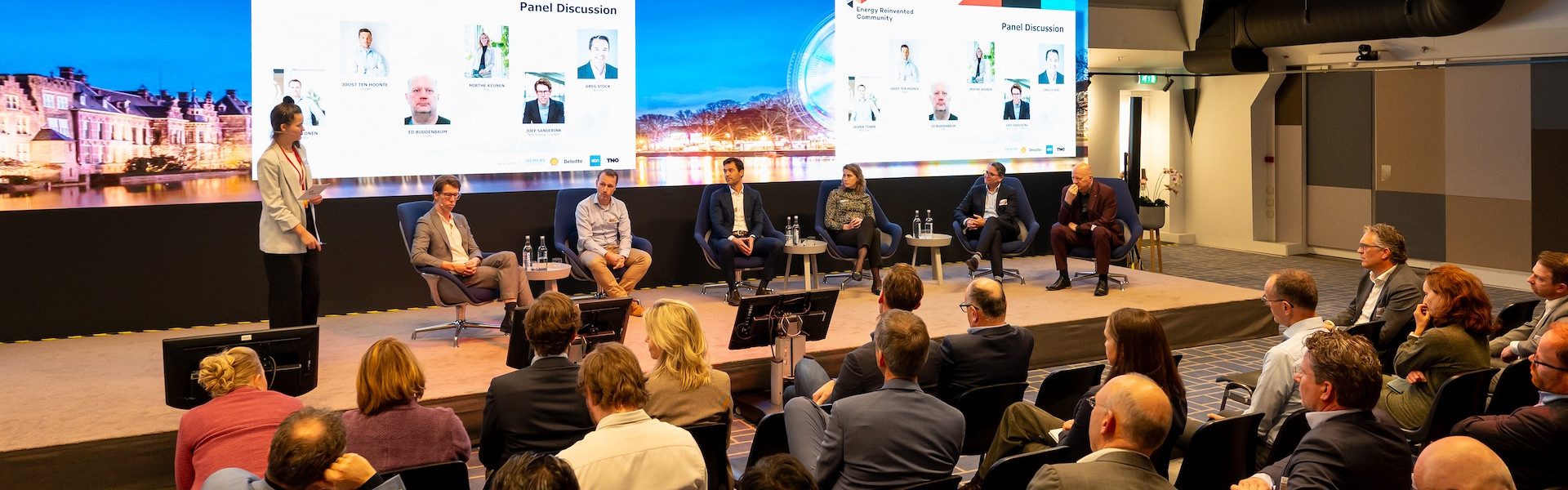
On November 20, 2025, ERC’s Focus Groups Hydrogen and System Integration brought together project developers, policymakers, EPC contractors, and innovation funders to explore a pressing question: Why does progress on green hydrogen feel so slow when the technology is proven? The answer emerged clearly through three compelling project presentations and an engaged panel discussion: making it work in practice is genuinely hard. With strong audience participation and candid insights from developers who have secured OWE subsidies - specifically invited to join the event in the audience and engage in the discussion -, the session delivered a frank assessment of the barriers holding back hydrogen deployment and the creative solutions emerging to overcome them.
Three Projects, Three Approaches
Joep Sanderink (New Energy Coalition) presented the REFORMERS project—Europe's first renewable energy valley in Alkmaar and Heiloo. With 27 partners from 10 countries, the project integrates electricity, heat, hydrogen, and green gas. The local hydrogen ecosystem features Hynoca producing hydrogen from organic waste with biochar as a carbon sink, and Stoff2 developing a hybrid electrolyzer. The project won the Clean Hydrogen award in Rotterdam in May 2025, with construction starting in 2026. Yet even this award-winning initiative faces grid congestion, that they aim to solve through group transport agreements with Alliander. On managing complexity, Sanderink noted:
"There are indeed challenges — you have to be flexible. The project was defined 3 years ago, things change — you need an adaptive approach."
"If you would implement energy hubs across the Netherlands—and there are tens of thousands potentially—I think there would be no grid congestion at this moment. We can solve it all if we work together."
Joost ten Hoonte (Uniper) next presented plans for a 200MW electrolyzer producing 18 million kg of hydrogen annually by 2030 at the Port of Rotterdam. The site seems perfect: brownfield location, offshore wind landing points, existing grid connection, hydrogen backbone access, and cooling water infrastructure. Yet Uniper cannot reach final investment decision due to unpredictable TenneT grid fees, the need for firm hydrogen purchase agreements waiting on RED III implementation, and strict renewable power requirements excluding subsidized offshore wind.
"Situated at the edge of the Maasvlakte II and close to Tennet’s substation, the perfect conditions were created for electrolysis... in that one specific area in Rotterdam. So, if there is one place where it could work, this is it."
Key Insights from the Panel Discussion
The three project developers were then joined on stage by Mirthe Kuenen (Senior Policy Advisor Hydrogen at Ministry of Climate Policy and Green Growth), Ed Buddenbaum (program manager at groeifonds Groenvermogen), and Greg Stock (Director of Green Hydrogen at Worley EPC) for a wide-ranging discussion that tackled the systemic challenges facing hydrogen deployment.
Grid tariffs and regulatory predictability dominated the conversation. Multiple speakers highlighted that without clarity on future grid fees and hydrogen backbone tariffs—which could increase 8-fold by 2032—investment decisions remain impossible. As Joost ten Hoonte put it: "Grid fees add €1.60/kg to our hydrogen costs today—that's already more than the gray hydrogen price. And we need to predict these tariffs for the next 20 years." The call went out for ACM to step in much earlier than the planned 2028 appointment to provide market predictability.
Demand creation emerged as the chicken-and-egg challenge. Mirthe Kuenen (Ministry of Climate Policy and Green Growth) acknowledged that while RED III obligations for refineries and mobility show promise, the current 4 percent industrial offtake obligation will not drive sufficient demand. Future instruments must reach end-product markets—green steel in cars, green ammonia in fertilizers, renewable carbon in fuels and products—to create meaningful pull. The frustration was palpable.
Technology and business model innovation offers hope. Greg Stock (Worley EPC) noted that outdoor electrolyzer installations and Chinese technology at half the price of Western suppliers could dramatically reduce CAPEX and challenges European developers and policy makers – how do we secure a level playing field in this domain and in these geopolitical times, and maintain an edge as technology providers in Europe? Flexible operation models that absorb cheap renewable power during oversupply—rather than baseload operation—can both stabilize the grid and reduce hydrogen costs, though this requires regulatory frameworks that reward system-supportive behaviour rather than penalize it with grid fees.
Broadening the hydrogen definition sparked debate. Several participants questioned whether the exclusive focus on green hydrogen slows progress, pointing to blue hydrogen and carbon-negative biohydrogen from organic waste (like Hynoca) that do not fit current subsidy boxes. Ed Buddenbaum (Groenvermogen program) emphasized that parallel development of large-scale and decentralized projects is essential—the backbone will not connect without demand, but demand will not materialize without local hydrogen ecosystems demonstrating viability.
The Road Ahead
The session revealed that the bumpy road to hydrogen execution is not paved with technical barriers—many of those are now being solved. The key obstacles are systemic: unpredictable costs, regulatory frameworks misaligned with project timelines, demand instruments that have not scaled, and geopolitical considerations around technology sourcing. Yet the energy in the room was constructive. With OWE projects now reaching implementation, new hydrogen hub regulations opening in 2026, and growing recognition that diverse business models and hydrogen types may be necessary to build momentum, the Dutch hydrogen sector is learning by doing. As the discussion closed, participants moved to continue conversations over drinks—a fitting testament to the collaborative spirit required to navigate this bumpy road together.
***
Session chaired by Tara van Abkoude (TNO)
Organized by:
Focus Group System Integration
Andreas ten Cate – Tekenkamer van de Industrie
Focus Group Hydrogen
Jan Prins – Siemens Energy
Tara van Abkoude – TNO
Mark Oosterveer – NL Hydrogen
Joep Sanderink – Future Energy Leaders


